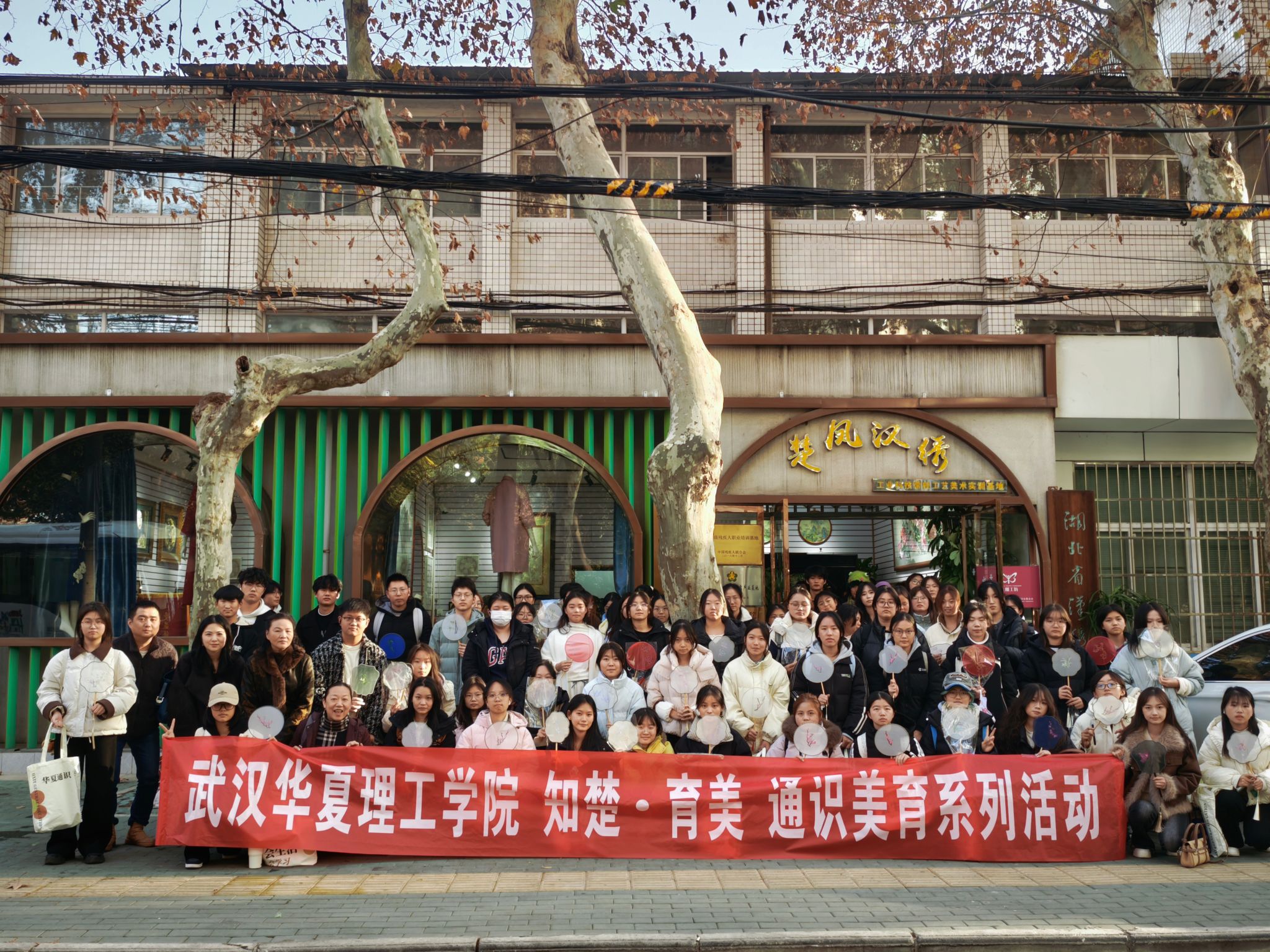
On December 14, HXIT organized more than 100 students of the Class of 2025 to visit Wuhan Chufeng Hanz Embroidery Workshop and carry out an immersive research and practice activity on the intangible cultural heritage of Hanz Embroidery. The activity was led by four teachers, namely Xu Li and Tu Junfu from the School of General Education, and Jiang ying and Jiao Jie from the School of Art Design and Media.
At Chufeng Hanz Embroidery Workshop, Chen Hui, President of Hubei Hanz Embroidery Association, and more than ten Hanz Embroidery masters gave a warm welcome and provided guidance. To ensure the teaching effect, the students were divided into four groups. Under the careful instruction of Hanz Embroidery masters, they systematically learned the classic "rolling stitch" and "lock stitch" techniques. From threading the needle to pattern composition, the students practiced by hand and gradually embroidered patterns with traditional cultural implications such as butterflies, green bamboos, secluded orchids, phoenixes and lotus flowers.
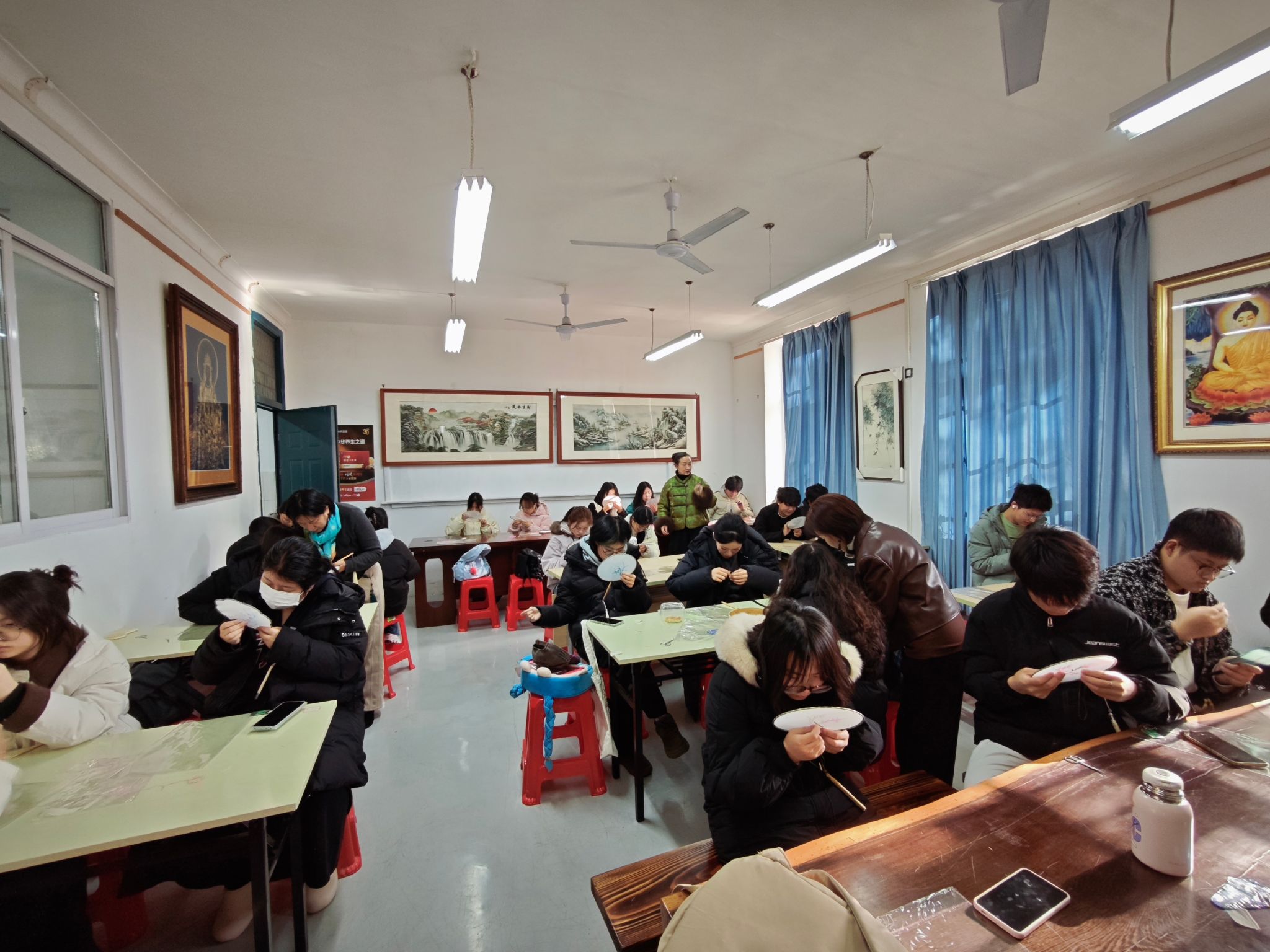
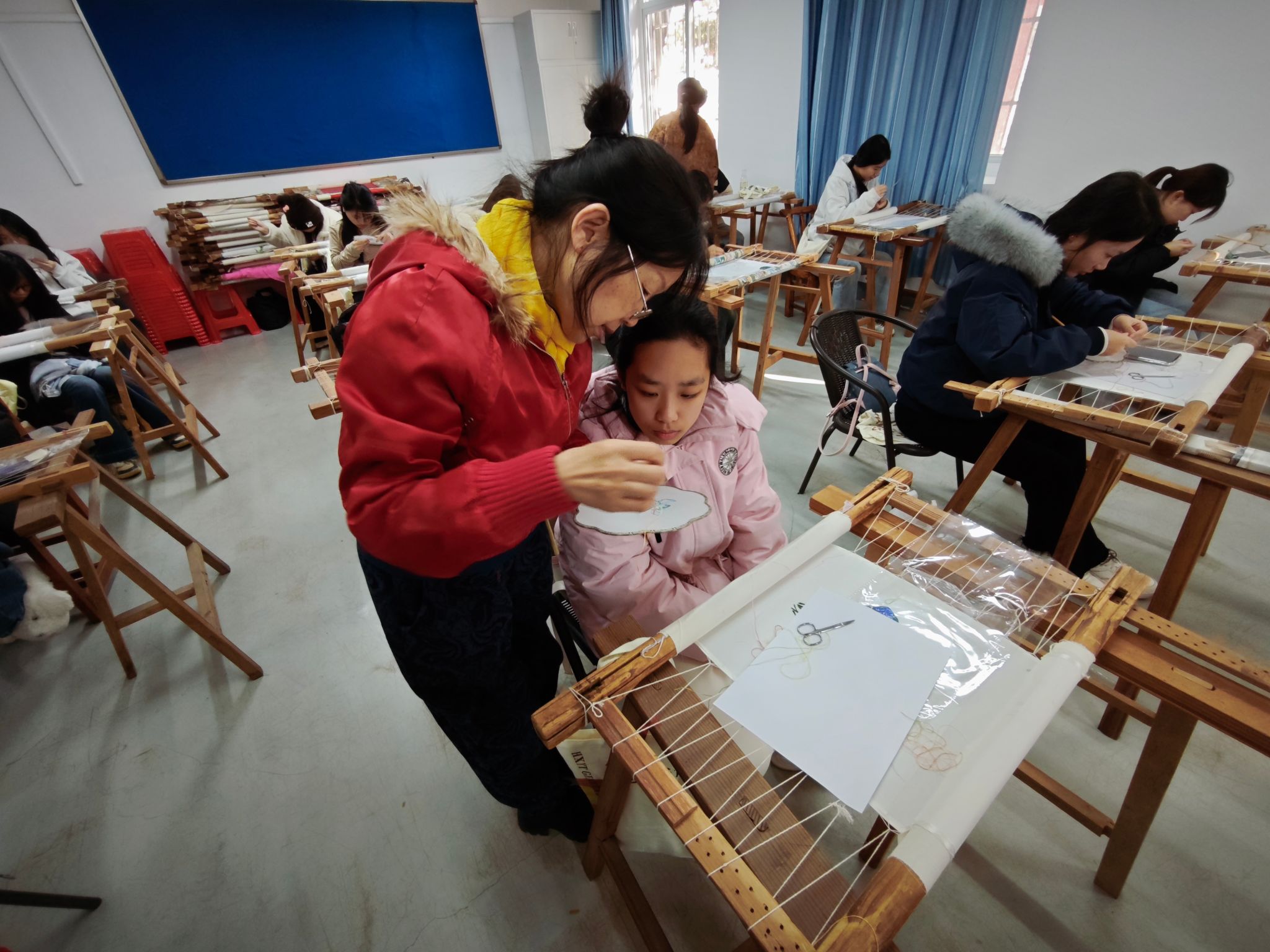
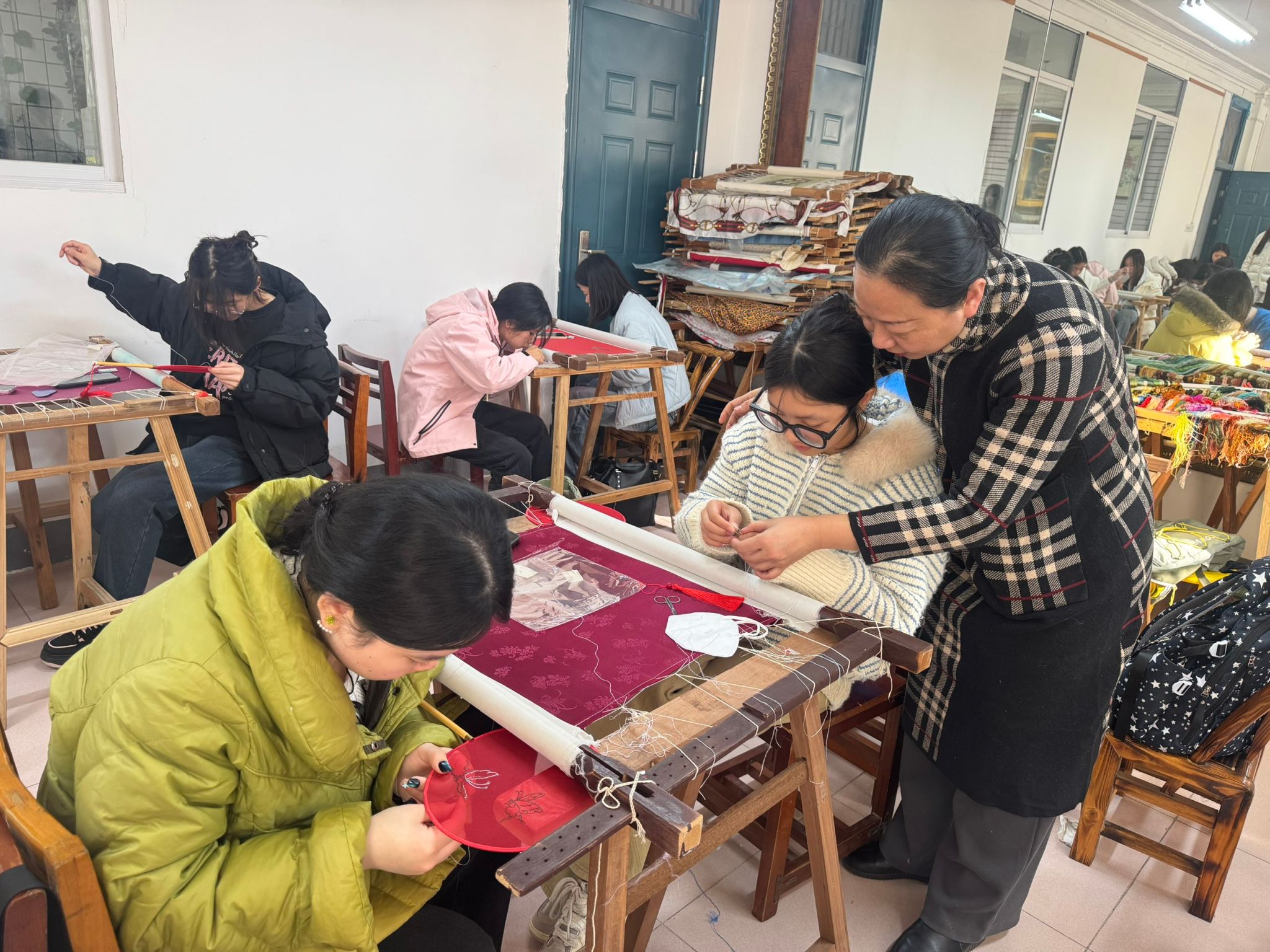
"I only saw Hanz Embroidery in museums before, but today, after embroidering a few stitches with my own hands, I truly felt the warmth and hardship of this craft," said Ma Xiaotian, a student of Class 1251 majoring in Visual Communication Design after the experience. After mastering the basic stitches, many students took the initiative to integrate modern creativity for personalized expression, achieving an initial dialogue between traditional craftsmanship and contemporary aesthetics.
Teacher Xu Li stated that Hanz Embroidery embodies a unique regional history and aesthetic spirit. Extending the classroom to the workshop has realized the in-depth integration of theoretical teaching and practical experience. This "mobile classroom" has accumulated vivid materials for students' future artistic design creation and inspired their innovative inspiration. She hoped that through personal practice, students' sense of identity with excellent traditional culture could be enhanced and their aesthetic literacy could be comprehensively improved.
Chen Hui, highly praised the students' concentration and enthusiasm during the activity. She pointed out that the inheritance and development of Hanz Embroidery are in urgent need of fresh young forces, and this research activity is a vivid practice of intangible cultural heritage entering campuses and integrating into contemporary life, injecting youthful vitality into the ancient craft.